
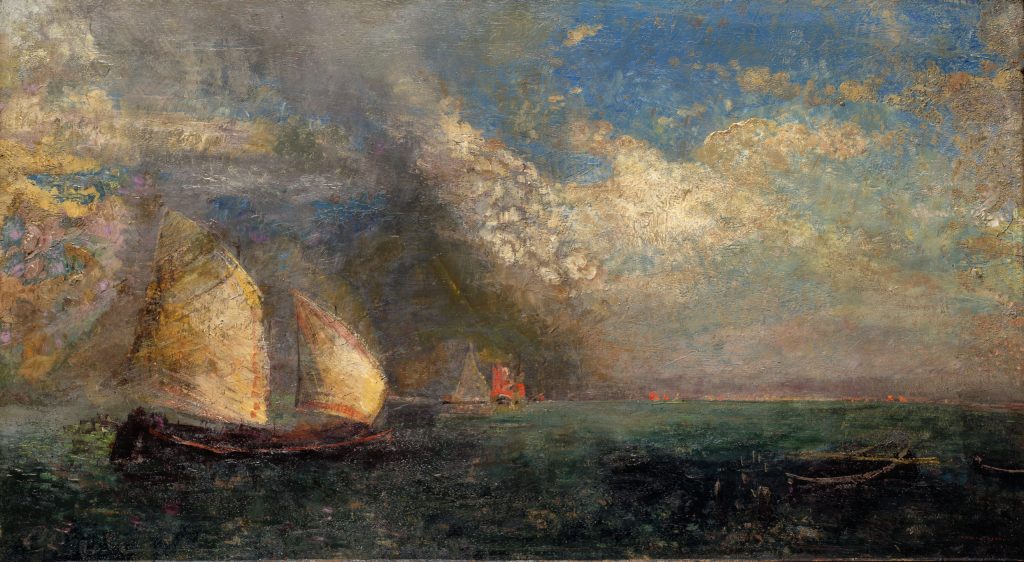
Odilon Redon, Barques. Souvenir of Venice, circa 1908. Oil on panel, 40×73.5cm, Museum Langmatt, Baden.
Photo M. und R. Fischli, Fotocompany, Baden.
THIS YEAR marks the 150th anniversary of the birth of the Impressionist art movement in Paris. In 1874, 31 artists, including Monet, Renoir, Degas, Morisot, Pissarro, Sisley and Cézanne, launched a new, “impressionistic” way of painting free from the rules governing classical styles and salons.
To mark this transformative moment, last Spring the Musée D’Orsay hosted a blockbuster exhibition, Paris 1874: Inventing Impressionism that coincided with my visit to the French capital in June.
My pleasure at seeing again such favourites as Renoir’s The Theatre Box, or for the first time, Caillebotte’s Peintres en bâtiment (an impressive study of perspective), was somewhat diminished. Not by the anticipated mass of visitors, but by the habit of too many to snap selfies and closeups, thereby scuppering my chances of a satisfying look at the rare and renowned masterpieces on display.
As chance would have it though, and much closer to home, the Hermitage’s latest exhibit coincides not only with Impressionism’s birthday, but also with the Foundation’s 40th anniversary (coincidentally, its first exhibition in 1984 also featured Impressionist works, drawn from Swiss French collections).
The serene, unrushed ambience of this hilltop villa above Lausanne offers the perfect setting to see and savour Masterpieces from the Museum Langmatt, a collection of Impressionist works collected by Jenny and Sidney Brown (ABB) in the early 20th century and exhibited for the first time outside Villa Langmatt (formerly the Brown’s family estate in Baden, northwest of Zurich).
Honeymoon indulgence becomes lifelong passion
It was on their honeymoon in Paris in 1896 that the Browns bought their first painting, a landscape by Eugène Boudin, a proponent of plein air painting that foreshadowed the Impressionists’ experiments on the fleeting nature of perception.
Between 1908 and 1915, at a time when Impressionist artworks were still very controversial, and despised by many, they purchased 40 of the 50 works that would eventually make up their collection. They chose works to satisfy their personal preference for bright colours, light, and movement.
Eventually, they housed their collection in a specially built, sky-lit atrium, showing the artworks with friends only in time as they were unsure of what the reaction would be.
In the 1930s, the Browns acquired three paintings by Paul Cézanne. The death of Sidney Brown in 1941 ended additions to their impressive collection.
Their choices proved visionary, though they were made for passion, not profit nor prestige. With paintings by Mary Cassatt, Paul Cézanne, Pierre Bonnard, Eugène Boudin, Edgar Degas, Paul Gauguin, Claude Monet, Camille Pissarro, Pierre-Auguste Renoir and Alfred Sisley, among others, the Langmatt Museum today houses one of the most important private collections of French Impressionists in Europe.
Landscapes, still life, and particularly Renoir
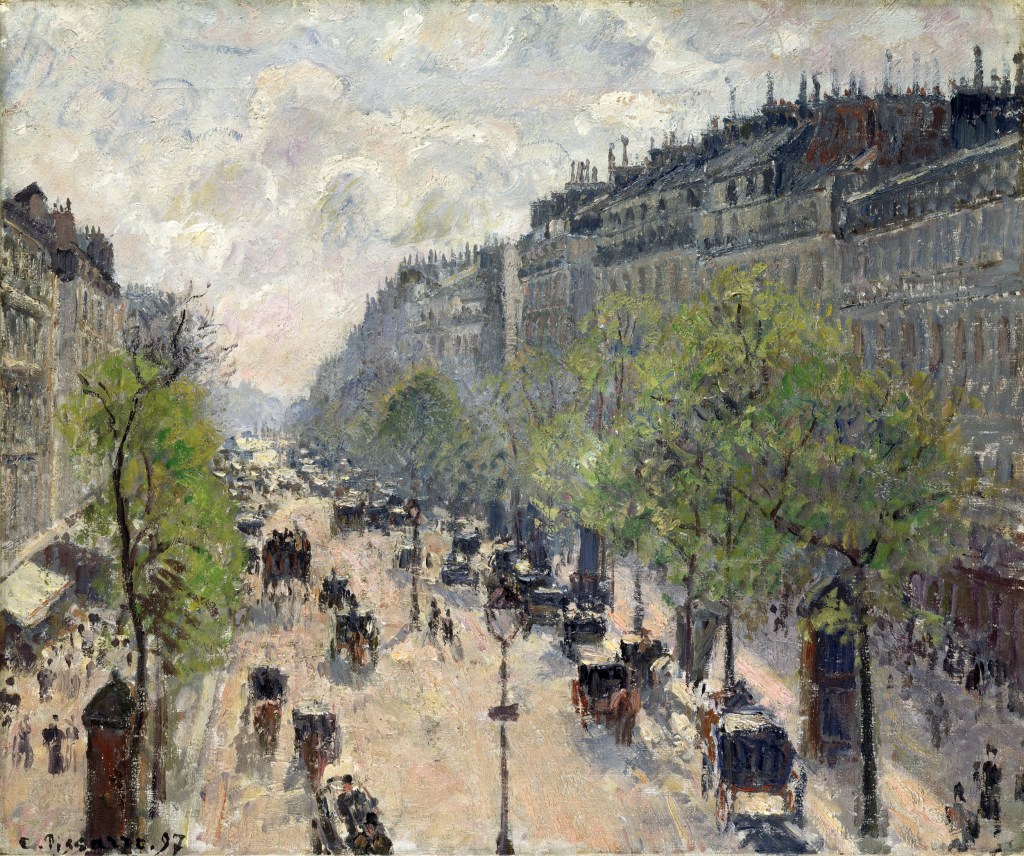
Jenny and Sidney Brown had a particular fondness for Impressionist landscapes and the collection on show at the Hermitage includes impressive works by Sisley, Monet, and Pissarro, for whose work they had a special affection. His six paintings in the Langmatt collection show Pissarro’s artistic progression, with his Boulevard Montmartre, Spring, showing the virtuosity of his final landscapes.
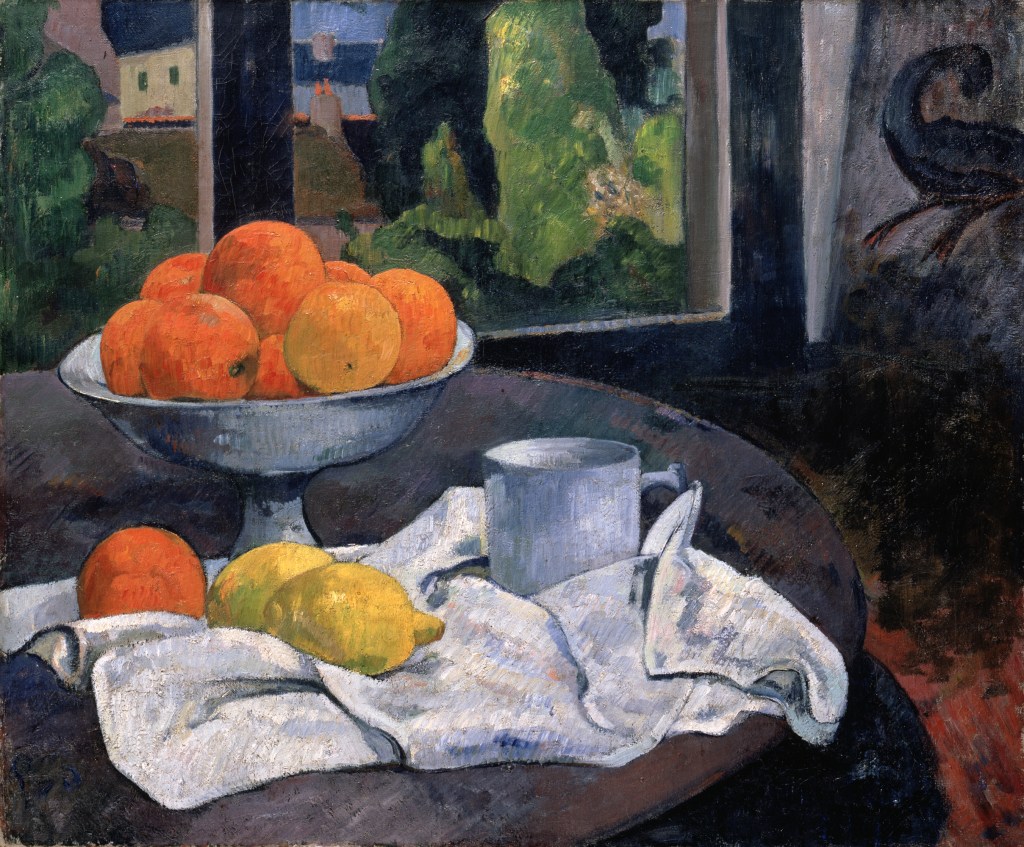
Along with landscapes and figures, still life was one of the Brown’s favourite genres. Little valued in France, the still life genre was very popular with 19th century English collectors. Its presence in the Brown collection possibly shows their attachment to the family’s British origins, as does the country cottage style of the Langmatt villa, where they raised their three sons.
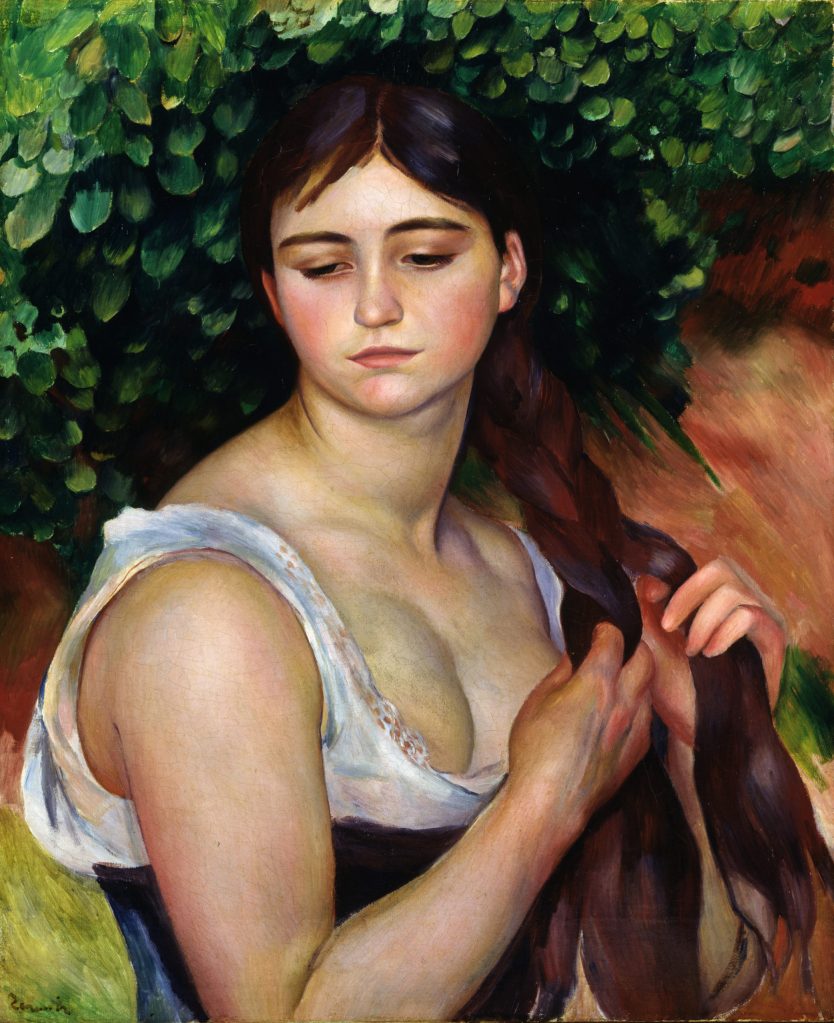
Jenny and Sidney Brown also passionately collected the works of Auguste Renoir and the 22 paintings in their collection cover more than four decades of his ever-evolving creative style.
Works from the 1870s reflect his interest in portraiture and especially in landscapes, while the 1880s show a temporary bow to the influence of the Old Masters. Inspired by Raphael, and Jean-Dominique Ingres, Renoir reinvented his style, which is evident in the firm drawing and sober palette of The Mat (above).
In 1888, however, Renoir’s “pearlescent period” arrived, synthesising his ambition as a colorist and his love of tradition. The carnal nudes, the pink children or the opulent bouquets then ensured Renoir’s immense success.
This impressive exhibition, testament to one couple’s love of Impressionism for its own sake continues until 3 November — see it at the Hermitage while you can. ♥
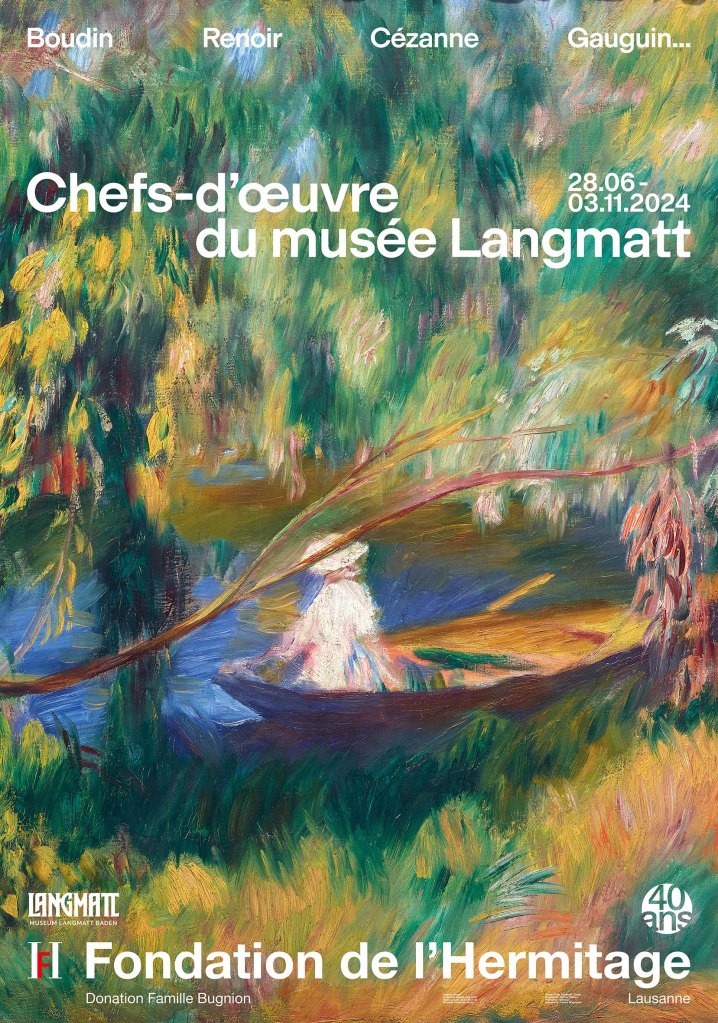
Masterpieces from the Museum Langmatt
28 June — 3 November 2024
Hermitage Foundation
2, rte du Signal, CH-1000 Lausanne
T. +41 (0)21 320 50 01
Practical Info: hours, fees, transport, Restaurant L’esquisse


One response to “Impressionist Masterpieces from the Langmatt Museum at Hermitage Foundation”
It’s such a pleasure to see that many masterpieces in one spot and without being pushed around.
Great exhibition, a must see for art lovers.
Thank you for sharing and passing on all the details.
LikeLike